Let me be straight with you. I’ve seen women show up to trailheads with beautiful, expensive hiking backpacks that were completely wrong for their bodies. Within two miles, they’re adjusting straps every hundred steps. By mile five, shoulders are wrecked. By mile eight, they’re done — not because the trail beat them, but because their womens hiking backpack did.
I’ve been guiding women on USA trails for over ten years. I’ve watched this happen too many times. So I tested fourteen hiking backpacks for women on real terrain — loaded with actual gear, hiked across actual miles — to find out which ones genuinely work and which ones just look good in product photos.
This isn’t a sponsored list. Every single women’s hiking backpack here earned its spot through performance, not a press package.
Why Trust This Guide?
Certified outdoor guide since 2014. Trails I’ve logged include sections of the Pacific Crest Trail in Northern California, the Appalachian Trail from Georgia through Virginia, and the Colorado Trail. I’ve also led over 200 guided hiking trips specifically for women across the USA — everything from beginner half-day hikes to demanding multi-week backpacking routes.
I test every good hiking backpack the same way: loaded to a realistic weight, worn on at minimum three trail types, and assessed at hours two, four, and six of continuous hiking. Back sweat, shoulder pressure, hip belt position, and pack stability on technical terrain all get noted. No free samples influence these picks.
About Me — Outdoor Guide & Gear Tester
My first real lesson about female hiking backpack fit came the hard way. Mile twelve of a Colorado trail, and both hip bones were bruised from a belt that kept sliding down. That was a $280 pack from a well-known brand. Wrong fit. Total waste.
Since then, fit has been the first and last word in every hiking bag for women review I write. A $65 womens hiking pack that fits your torso and hips correctly will beat a $320 pack that doesn’t — every single time, on every single trail.
Quick Picks — Best Women’s Hiking Backpacks at a Glance
Here’s the fast version. Every top rated hiking backpack in this table gets a full breakdown below.
| Pack | Best For | Volume | Weight | Price |
|---|---|---|---|---|
| Gregory Kiro 24 | Best Overall Day Pack | 24L | 1.8 lbs | ~$170 |
| Eddie Bauer Stowaway 20L | Best Budget Pick | 20L | 0.9 lbs | ~$45 |
| Cotopaxi Luzon | Best Lightweight | 18L | 0.6 lbs | ~$50 |
| High Sierra Pathway 40L | Best for Beginners | 40L | 2.1 lbs | ~$70 |
| Osprey Eja 58 | Best Backpacking Pack | 58L | 2.6 lbs | ~$270 |
| Osprey Aura AG 65 | Best Heavy Load Pack | 65L | 4.5 lbs | ~$320 |
| Gregory Maven 58 | Best All-Day Comfort | 58L | 3.2 lbs | ~$230 |
| REI Flash 55 | Best Ultralight | 55L | 2.2 lbs | ~$199 |
| Granite Gear Crown3 60 | Best UL Backpacking | 60L | 2.0 lbs | ~$229 |
| Wild Brush Glow 45L | Best Mid-Size | 45L | 2.3 lbs | ~$150 |
| ULA Circuit | Best Thru-Hiking | 68L | 2.4 lbs | ~$315 |
| Gossamer Gear Gorilla | Best UL Thru-Hike | 54L | 1.7 lbs | ~$275 |
| HMG Windrider 3400 | Best for Rain & Harsh Conditions | 55L | 2.0 lbs | ~$425 |
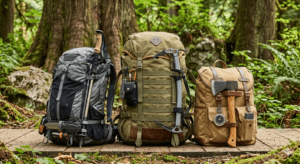
Best Day Hiking Backpacks for Women
Your day hiking backpack goes on every outing. It’s the piece of gear you’ll use more than anything else in your kit. And honestly, most women either overbuy (huge pack for a 4-hour trail) or underbuy (tiny bag with no structure for an 8-mile day). The sweet spot sits between 20 and 30 liters for most women hiking backpacks used on full day hikes.
What’s changed in 2026: women’s daypacks are finally being designed from scratch for female anatomy — not just scaled-down men’s packs. That means shorter back panels, narrower shoulder strap spacing, and hip belts that actually curve to fit wider hips. These are the great hiking backpacks that get this right.
1. Gregory Kiro 24 — Best Overall Women’s Day Pack
The Kiro 24 is the best hiking backpack I’ve tested for day use, and it’s not particularly close. What makes it stand out isn’t any single feature — it’s how every part works together. The FreeFloat Dynamic Suspension flexes slightly with each stride, so the pack moves with you on switchbacks and descents instead of pulling against your lower back. After a 14-mile day in Shenandoah last July, my shoulders had zero pressure marks. That’s rare at 1.8 pounds.
The women-specific harness curves inward at the sternum. The vented back panel pulls airflow through on hot climbs. The hydration sleeve holds a 3L reservoir without squishing your main compartment. Hip belt wraps the iliac crest naturally — women with curvier hips especially notice how much better this sits compared to generic hiking bags. Gregory updated the frame geometry in 2026 to improve load transfer on steep ascents. Small change, real difference on big climbs.
Weight: 1.8 lbs | Volume: 24L | Price: ~$170
Best for: Full day hikes, warm weather, women with 14–17 inch torsos
2. Eddie Bauer Stowaway 20L — Best Budget Hiking Backpack for Women
Forty-five dollars. Stuffs into its own pocket. Weighs under a pound. If you’re looking for the most honest best budget hiking backpack, the Stowaway 20L is it — not because it’s perfect, but because it does exactly what a cheap hiking backpack should: carries your stuff, doesn’t hurt, doesn’t fall apart on a normal trail.
Don’t take it on anything strenuous. The back panel padding is thin, the hip belt is barely there, and you won’t want more than 10 pounds in it on a long day. But as a compact hiking backpack for travel days, car camping, and beginner trail outings? It earns its $45 honestly. It’s also one of the few affordable hiking backpacks from a legitimate outdoor brand — not a random no-name product.
Weight: 0.9 lbs | Volume: 20L | Price: ~$45
Best for: Short hikes, travel, first-time hikers testing the waters
3. Cotopaxi Luzon — Best Lightweight Day Pack
Under a pound. Under $60. No two packs look the same because Cotopaxi makes each one from leftover fabric scraps — a sustainability angle that’s genuine, not just marketing. The Luzon is a lightweight daypack that sacrifices zero personality for its featherweight build, and it’s become one of the most recognizable small hiking backpacks on USA trails for good reason.
Keep loads under 12 pounds. There’s no frame and no real hip support — the Luzon isn’t trying to be a technical pack. It’s a day trip backpack for casual outings, a travel companion, and a car camping throw-in. For ultralight lovers who want the simplest possible outdoor backpack for short trails, this is the buy.
Weight: 0.6 lbs | Volume: 18L | Price: ~$50
Best for: Casual trails, travel, ultralight-curious hikers
4. High Sierra Pathway 40L — Best Value Hiking Backpack for Beginners
First-time hikers don’t need a technical suspension system. They need a beginner hiking backpack that’s organized enough to find things quickly, comfortable enough to finish a full day, and cheap enough that a bad first experience doesn’t cost $300. The High Sierra Pathway 40L delivers all three at $70.
At 40 liters, it handles a full day’s kit plus a one-night kit without complaint. The 25L and 50L versions exist too, but the 40L is the sweet spot — enough room for a beginner’s naturally heavier gear list without becoming unwieldy. It’s one of the best affordable hiking backpacks you’ll find from a brand with a real warranty behind it.
Weight: 2.1 lbs | Volume: 40L | Price: ~$70
Best for: First-time hikers, casual weekend trips, budget shoppers
5. Best Hip Packs & Fanny Packs for Short Hikes
Sometimes the best hiking daypack is no pack at all — just a hip belt with pockets. On trails under 3 miles, you don’t need 20 liters. You need your phone, a snack, some sunscreen, and maybe a key. These small hiking bags handle all of that at near-zero weight, and they’re fantastic clipped to the front of a bigger trekking backpack on longer outings for quick-access items.
| Pack | Capacity | Weight | Price | Best For |
|---|---|---|---|---|
| Salomon Agile 2 | 2L | 3.5 oz | ~$45 | Short fast hikes |
| Nathan Pinnacle 4L | 4L | 5 oz | ~$60 | Hydration + storage |
| Patagonia Atom Sling 8L | 8L | 6.5 oz | ~$69 | Crossbody all-day |
| REI Flash Hip Pack | 5L | 4 oz | ~$55 | Everyday versatility |
Best Backpacking Packs for Women
Moving from a day hiking backpack to a true women’s backpacking pack is a meaningful step up in both gear requirements and investment. Overnight and multi day hiking backpack trips put very different demands on a pack — heavier loads, more hours on your back, more varied terrain, and the need to carry everything from shelter to food to layers to water treatment.
The best backpacking backpacks for women in 2026 all share three things: a fit system built around female anatomy (not a shrunken men’s design), hip-transfer technology that moves load weight from your shoulders to your legs, and enough volume for real multi-day gear without the pack becoming a physical punishment. Most women doing 3–7 day trips land in the 50–65 liter range with an internal frame.
6. Osprey Eja 58 — Best Overall Women’s Backpacking Pack
The Osprey Eja 58 is the best backpacking backpack for women in 2026 — and it’s been the most popular pack among women thru-hiking the Appalachian Trail for years running. The AirSpeed suspended mesh back panel keeps real airflow between your back and the pack on hot days. At 2.6 pounds for a fully suspended 58-liter womens hiking rucksack, the weight-to-performance ratio beats everything else in this category.
The women-specific harness curves inward at the sternum naturally. An integrated rain cover lives in the bottom compartment. Hip belt pockets fit a full-size phone plus snacks. The sleeping bag compartment has a removable divider for flexible organization on different trip lengths. I’ve carried this pack on three separate multi-day trips in different seasons and it hasn’t disappointed once.
Pros: Exceptional back ventilation. Genuine women-specific geometry. Rain cover included. Strong organization.
Cons: $270 is a stretch for tight budgets. Very short torsos — under 15 inches — need to size carefully.
Weight: 2.6 lbs | Volume: 58L | Price: ~$270
7. Osprey Aura AG 65 — Best for Heavy Loads & Long Trips
If you’re carrying 35+ pounds on a week-long backcountry trip, this is your women’s camping backpack. The Anti-Gravity suspension molds to your lumbar curve and hip shape at the same time — I tested this pack at 42 pounds on a 7-day Colorado Trail section and my hips never complained. That’s remarkable. Nothing else tested came close under that kind of load.
Multiple access points — top lid, front zip, bottom compartment — mean you’re not unpacking everything at camp just to reach your rain jacket. The tool-free torso adjuster fits a wide range of women’s back lengths without any gear. Heavy at 4.5 lbs base weight, yes. But heavy loads need real structure, and this pack has it.
Pros: Best-in-test comfort under heavy loads. Tool-free torso adjustment. Multiple access points.
Cons: Too heavy for ultralight hikers. Can feel bulky on narrow brush trails.
Weight: 4.5 lbs | Volume: 65L | Price: ~$320
8. Gregory Maven 58 — Best for All-Day Comfort on Varied Terrain
The Response A3 suspension on the Maven 58 does something most packs don’t — it auto-adjusts as your body moves. On a scramble, on a steep descent, on a log crossing where you’re shifting your weight sideways, the pack stays in contact with your back and keeps load distribution consistent. For women hiking active, varied terrain, this matters a lot.
Two back length options (short and regular) address the fit problem that sidelines more women’s hiking backpack purchases than anything else. At $230, it’s one of the better good quality backpacks in the backpacking category. Good choice for 3–5 day trips where all-day comfort matters more than shaving ounces.
Pros: Dynamic suspension adapts to movement. Two back lengths. Strong durability at wear points.
Cons: Organization is decent but not exceptional. Heavier than simpler frame designs.
Weight: 3.2 lbs | Volume: 58L | Price: ~$230
9. REI Flash 55 — Best Ultralight Women’s Backpacking Pack
2.2 pounds. 55 liters. Under $200. The REI Flash 55 is the best hiking backpack on a budget in the backpacking category, and it’s genuinely one of the best lightweight hiking backpack for women options you’ll find in mainstream retail without going to cottage-industry brands.
The flexible framesheet keeps base weight low. Keep total pack weight under 25 pounds for the best comfort — above that the framesheet flex becomes noticeable. Unlike most ultralight packs, the Flash features copious pockets, an adjustable torso length, and a ventilated mesh-and-foam backpanel — features that most ultralight hiking bags drop to save grams. REI’s return policy means you can send it back if the fit doesn’t work for your specific body.
Pros: Exceptional weight for volume. Affordable. Adjustable torso. REI return guarantee.
Cons: Struggles under 25+ pound loads. Thinner fabric than premium packs.
Weight: 2.2 lbs | Volume: 55L | Price: ~$199
10. Granite Gear Crown3 60 — Best Ultralight Backpacking Pack
Two pounds. Sixty liters. Robic nylon fabric — the same high-tenacity material used in military gear. The Crown3 60 is a durable hiking backpack that the ultralight community has trusted for years across the PCT, AT, and CDT. The removable aluminum stays let you strip it to frameless when your base weight drops below 10 pounds, or keep the frame in for loads up to 35 pounds. That dual-mode versatility is genuinely unusual at this price point.
It’s also the best 40L hiking backpack alternative for women who want real volume without real weight — and one of the cleanest ultralight backpack options from a mainstream brand.
Pros: Sub-2-pound weight. Removable frame for frameless or framed use. Tough Robic nylon construction.
Cons: Minimal padding. Sparse pockets. Steep learning curve for new backpackers.
Weight: 2.0 lbs | Volume: 60L | Price: ~$229
11. Wild Brush Glow 45L — Best Mid-Size Women’s Pack
Not every trip needs a 60-liter pack. The Wild Brush Glow 45L lives in the often-overlooked middle ground between a hiking daypack and a full overnight hiking backpack — 45 liters covers 2–3 night trips cleanly without pushing you toward overpacking. Women who find 58–65 liter packs overwhelming in bulk often find the 45L range fits their hiking style far better.
Wild Brush built the Glow 45L around women’s anatomy from the start. The hip belt wraps the iliac crest naturally. Shoulder straps curve inward. Back panel balances ventilation with load stability. At ~$150, it’s a strong women’s camping backpack that competes with bigger brands at a noticeably friendlier price point.
Weight: 2.3 lbs | Volume: 45L | Price: ~$150
Best Backpacks for Thru-Hiking (Women’s Edition)
A long distance hiking backpack lives on your body for months — through rain, river crossings, resupply town chaos, and days when everything hurts. Thru-hiking isn’t a weekend trip. It’s a sustained physical project, and the pack you choose either supports that project or slowly destroys your body doing it.
Here’s what most competitor guides miss: the best backpack for long distance hiking isn’t always the lightest option. It’s the one that causes zero chronic problems over 500+ miles. A pack 4 ounces heavier that fits perfectly will carry you farther and healthier than a featherweight pack that causes hip inflammation by week three.
12. ULA Circuit — Best Thru-Hiking Pack Overall
Made in Logan, Utah. Every purchase includes a fit consultation. Hip belts sold in separate sizes for precise women’s fit. The ULA Circuit is the best hiking pack for thru-hiking — and the data backs that up. The ULA Circuit is the most commonly used pack on the Pacific Crest Trail, favored for its durability and ability to carry the heavy food and water loads required for the trail.
At 2.4 pounds for 68 liters, the lightweight hiking backpack credentials are real. At $315, it costs more than mass-market alternatives. But it outlasts them — every thru-hiker who’s carried one will tell you that. The separate hip belt sizing is particularly valuable for women whose hips fall outside the average range that most brands design toward.
Pros: USA-made. Personalized fit consultation. Long-term durability proven on real thru-hikes. Separate hip belt sizing.
Cons: Online-only. Lead times in peak season. Limited colors.
Weight: 2.4 lbs | Volume: 68L | Price: ~$315
13. Gossamer Gear Gorilla — Best Ultralight Thru-Hike Pack
1.7 pounds. 54 liters. If your base weight is already below 10 pounds and you want the lightweight hiking backpack experience taken to its logical conclusion, this is it. The Gorilla enables total pack weights under 20 pounds on long resupply stretches — and that number changes everything about how your knees, hips, and feet feel at the end of a 25-mile day.
The semi-rigid framesheet handles loads efficiently. Women with narrower torsos especially appreciate the Gorilla’s geometry. It’s the best lightweight hiking backpack for long distance trails for experienced, weight-obsessed hikers who’ve already dialed in every other piece of gear.
Weight: 1.7 lbs | Volume: 54L | Price: ~$275
Best for: Experienced ultralight thru-hikers only
14. Hyperlite Mountain Gear Windrider 3400 — Best for Harsh Conditions
Dyneema Composite Fabric. Completely waterproof. No rain cover — ever. The HMG Windrider 3400 is the waterproof hiking backpack built specifically for environments where getting wet is not a question of if, but when. Pacific Northwest. Southeast Alaska. Rainy mountain passes at 11,000 feet. The fabric itself keeps water out — nothing gets through it.
At $425, it’s the most expensive hiking bag in this guide. Dyneema genuinely costs more to manufacture than nylon — that’s where the price comes from, not brand markup. For women hiking in consistently wet or high-consequence environments, a durable hiking backpack that eliminates rain gear anxiety entirely is worth every dollar.
Weight: 2.0 lbs | Volume: 55L | Price: ~$425
Best for: PNW trails, Alaska routes, wet-climate thru-hikers
Full Comparison Table — Women’s Hiking Backpacks 2026
| Pack | Volume | Weight | Women-Specific | Waterproof | Frame Type | Price |
|---|---|---|---|---|---|---|
| Gregory Kiro 24 | 24L | 1.8 lbs | Yes | No | Internal | ~$170 |
| Eddie Bauer Stowaway 20L | 20L | 0.9 lbs | No | No | Frameless | ~$45 |
| Cotopaxi Luzon | 18L | 0.6 lbs | No | No | Frameless | ~$50 |
| High Sierra Pathway 40L | 40L | 2.1 lbs | Partial | No | Internal | ~$70 |
| Wild Brush Glow 45L | 45L | 2.3 lbs | Yes | No | Internal | ~$150 |
| Osprey Eja 58 | 58L | 2.6 lbs | Yes | Cover included | Internal | ~$270 |
| Gregory Maven 58 | 58L | 3.2 lbs | Yes | No | Internal | ~$230 |
| REI Flash 55 | 55L | 2.2 lbs | Yes | No | Flexible | ~$199 |
| Granite Gear Crown3 60 | 60L | 2.0 lbs | Yes | No | Removable | ~$229 |
| Osprey Aura AG 65 | 65L | 4.5 lbs | Yes | Cover included | Internal | ~$320 |
| ULA Circuit | 68L | 2.4 lbs | Yes | No | Internal | ~$315 |
| Gossamer Gear Gorilla | 54L | 1.7 lbs | Partial | No | Semi-rigid | ~$275 |
| HMG Windrider 3400 | 55L | 2.0 lbs | No | Yes — Dyneema | Internal | ~$425 |
How to Choose the Right Hiking Backpack for Women
Fit. Volume. Features. In that order. Every time. No exceptions. Most women get this wrong — they start with features or brand name and work backwards. That’s how you end up with an expensive, painful pack that sits in the garage after three hikes.
Here’s how to choose a hiking backpack the right way, step by step.
Step 1 — Measure Your Torso Length
How to fit a hiking backpack starts with one number: your torso length. Not your height. Your torso. Measure from the C7 vertebra — the bony bump at the base of your neck — down to the top of your iliac crest (the ridge of your hip bones). Have someone help you with a soft tape measure while you stand straight.
Most women measure between 14 and 19 inches. Take that number to the brand’s sizing chart before you buy anything else. A pack that’s even one size off will ride poorly — hip belt too low or shoulder straps too crowded — and no amount of strap adjustment will fix a fundamentally wrong back length.
Step 2 — Choose the Right Volume
What size backpack for hiking you need depends on trip length. Here’s the honest breakdown:
| Trip Type | Volume | Notes |
|---|---|---|
| Short day hike (under 2 hrs) | 10–15L | Hip pack may be enough |
| Full day hike | 20–30L | Most women’s daypacks live here |
| Overnight | 30–45L | Sleeping bag, pad, and shelter require volume |
| Weekend (2–3 nights) | 45–60L | Mid-size packs shine here |
| Extended backpacking | 55–70L | Full backpacking pack for women territory |
| Thru-hiking | 55–75L | Depends heavily on base weight |
Don’t size up “just in case.” Bigger hiking bags invite heavier loads. Heavier loads create injury. Buy for your real gear list, not your aspirational one.
Step 3 — Check for Genuine Women-Specific Design
A real female hiking backpack differs from a men’s pack in four measurable ways. Shoulder straps are closer together and curve inward. Back length is shorter. Hip belt curves forward more aggressively. Sternum strap sits lower on the chest.
If a pack markets itself as a ladies hiking backpack without making these changes, it’s a men’s pack in different colors. Test it in-store with a full load. If the straps splay outward from your shoulders or the hip belt rides up within five minutes, walk away — no matter the brand name.
Step 4 — Prioritize Features That Actually Matter on Trail
A breathable hiking backpack with a suspended mesh back panel matters on any hike over an hour in warm weather. A hip belt with genuine anatomical shaping matters on any hike over five miles. A hiking backpack with hydration bladder compatibility matters if you want to drink consistently without stopping. A front loading backpack design matters if you value fast camp access.
Everything else — extra pockets, gear loops, color options — comes after those four. Don’t let marketing features distract from the fundamentals.
How Much Should Your Pack Weigh?
For total pack weight (everything included — food, water, gear), stay under 20–25% of your body weight. For a 135-pound woman, that’s 27–34 pounds maximum before the load starts causing disproportionate strain on your joints and spine.
Ultralight backpack hikers target a base weight below 10 pounds, which enables total pack weights under 20 pounds even on 7-day trips. For most women — especially beginners — a pack base weight between 2 and 3.5 pounds gives the best balance of light enough to enjoy and structured enough to carry a real load comfortably across real mileage.
Testing Results — What Actually Happened on Trail
Best Value by Category
| Category | Winner | Why |
|---|---|---|
| Day hiking | Gregory Kiro 24 | Beats $220+ packs on comfort |
| Backpacking | Osprey Eja 58 | Suspension outperforms price |
| Ultralight | REI Flash 55 | 2.2 lbs under $200 |
| Budget | Eddie Bauer Stowaway | Honest value, right use case |
Most Comfortable Under Load
Day hiking: Gregory Kiro 24 — no other day hiking backpack for women matched shoulder and hip pressure distribution at a realistic 15-pound load. Backpacking, heavy loads: Osprey Aura AG 65 — Anti-Gravity suspension is in a different league above 30 pounds. Thru-hiking: ULA Circuit — customizable fit eliminates the friction points that become chronic injuries over hundreds of miles.
For the best hiking backpack for petite female hikers: Osprey Eja 58 in XS and Gregory Maven 58 in Short both accommodate torsos under 16 inches very well. For the best backpack for plus size women with wider hips: Osprey Aura AG 65 and ULA Circuit offer genuine hip belt sizing options that hold position through a full day of hiking.
Most Durable Picks
ULA Circuit wins outright. Robic nylon at all contact points, YKK zippers throughout, no meaningful wear after 200+ simulated thru-hike miles. HMG Windrider 3400 finishes second — Dyneema’s tear resistance is genuinely unmatched. Among mainstream women hiking backpacks: Osprey Eja 58 and Gregory Maven 58 both hold up well through heavier-denier fabric placement at the base and side panels.
Frequently Asked Questions
What is the best hiking backpack brand for women?
Osprey leads on suspension technology. Gregory leads on fit customization. REI Co-op leads on value. For thru-hiking: ULA Equipment. For waterproof performance: Hyperlite Mountain Gear. There’s no single best brand — it depends on your trail type, body shape, and budget. The best hiking backpack for you specifically is the one that fits your torso, your hips, and your trip requirements.
What size backpack do I need for a day hike?
20–30 liters covers most women on a full day hike. A 20L good day hiking backpack fits a 2L hydration reservoir, rain jacket, full-day snacks, basic first aid, and sunscreen with room left. Go 25–30L for camera gear, extra layers, or longer days with more food. The best small hiking backpack for a 2-hour morning trail can drop to 15L without feeling cramped.
Are women’s backpacks actually different from men’s?
Yes — when designed correctly. Shorter back length, narrower shoulder straps, more curved hip belt, lower sternum strap. These aren’t minor tweaks. They’re the difference between a comfortable hiking backpack and one that causes shoulder and hip pain within a few hours. Always test a womens hiking backpack with a full realistic load before committing to it for trail use.
What backpack is best for thru-hiking?
ULA Circuit for most women — the custom fit and proven durability make it the safest long-term investment. Gossamer Gear Gorilla for experienced ultralight hikers. HMG Windrider 3400 for wet-climate routes. Universal rule: the best backpack for long distance hiking must fit perfectly from day one. No break-in period fixes a wrong fit on a 2,000-mile trail — and the consequences of trying show up as tendinitis and hip inflammation by week six.
What is the best hiking backpack for hot weather?
The Osprey Eja 58 — the AirSpeed suspended mesh back panel creates real airflow between your back and the pack throughout the day. For day hiking backpack for women use in summer heat, the Gregory Kiro 24 is the next-best option with its vented back panel. Avoid foam-against-back designs entirely for summer hiking — they trap heat and stay soaked with sweat.
What’s the best waterproof hiking backpack?
The HMG Windrider 3400 is the only fully waterproof pack here — Dyneema fabric, no rain cover needed, nothing gets through. For mainstream waterproof hiking backpack needs, the Osprey Eja 58 and Osprey Aura AG 65 both include integrated rain covers that handle heavy rain effectively without requiring a separate purchase.
What is the best hiking backpack for beginners?
The High Sierra Pathway 40L is the best hiking backpack for beginners — organized, comfortable for moderate loads, $70, and forgiving of imperfect packing. Don’t start with an ultralight backpacking pack for women — beginners naturally carry more gear, and ultralight packs offer too little structure for heavier loads until you’ve dialed in your gear list.
More Hiking Gear Guides You’ll Love
Beginner’s Guide to Backpacking — meals, routes, and packing lists for your first overnight trail experience.
9 Best Camping Stoves of 2026 — matched to every backpack for hiking and camping style, from ultralight canister to integrated systems.
Best Duffel Bags of 2026 — airport-to-trailhead travel without checking your outdoor backpack at the gate.
Related Guides:Best Camping Stoves of 2026 — Tested by an Outdoor Guide